What a flight engineer does
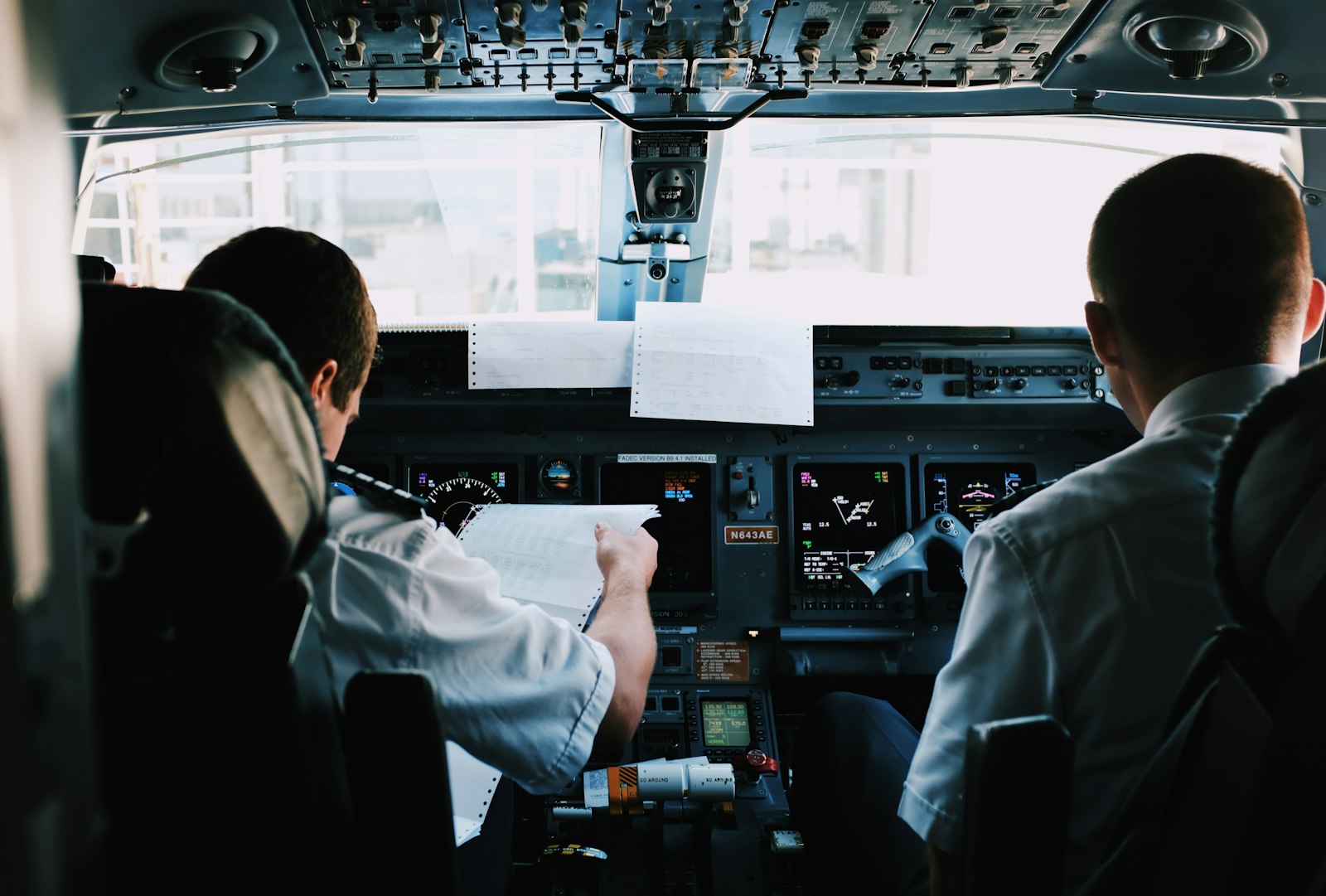
On some large aircraft, a crew member other than the pilots runs the aircraft's systems, and in the Air Force that has been the flight engineer. The service's page for Mobility Force Aviators, the enlisted field that outside career guides now link with flight engineering, lists duties such as "monitor and operate aircraft and engine systems controls" and "perform in-flight refueling duties."
The recruiting site's aviation section still advertises the role by name: "From Flight Engineers to In-Flight Refueling specialists, the Air Force offers dozens of opportunities." Click through, though, and the old job is gone.
Where the career field went
Airforce.com no longer has a separate flight engineer page. Its flight engineer and loadmaster links both open the page for the Special Missions Aviator, specialty code 1A1X3. The Mobility Force Aviator, code 1A1X2, has its own page. Career guides outside the Air Force place today's flight engineers mostly in that mobility field, but we couldn't find an official, dated announcement of the change, so treat the exact split as something to confirm with a recruiter.
Folding enlisted flyers together isn't new. In 2012 the Air Force created a Special Missions Aviation field by merging the aerial gunners and flight engineers of its HH-60G Pave Hawk and CV-22 Osprey fleets with AC-130 gunship loadmasters, about 920 airmen in all. Air & Space Forces Magazine reported at the time that the goal was "to balance and sustain the career enlisted aviator force."
The number of seats has also shrunk as older jets retire. The last KC-10 tanker left Travis Air Force Base on September 26, 2024, and Master Sgt. Van Stewart Jr. was its final flight engineer. The E-8C JSTARS surveillance jet flew its last Air Force mission in November 2023.
Getting in straight from high school
Both aircrew fields take recruits as young as 17, and both start the same way: Basic Military Training, then the Aircrew Fundamentals Course. Here's how the entry rules compare, as listed on airforce.com:
| Requirement | Mobility Force Aviator (1A1X2) | Special Missions Aviator (1A1X3) |
|---|---|---|
| ASVAB line score | Mechanical 60 | General 60 and Mechanical 60 |
| Age | 17 to 42 (the page also says 18 in one spot) | 17 until the 42nd birthday |
| Physical | Height 57.5 to 80 inches; must keep aircrew physical qualification | Normal depth perception |
| Job training | Aircrew Fundamentals Course | 27 days at Lackland, plus Aircrew Fundamentals |
The mobility page adds that applicants without a diploma need an AFQT score of at least 65. If those line scores look unfamiliar, our guide to how the ASVAB is scored explains the General and Mechanical composites.
The Air Force's recruiting pages don't name a specific flight physical for these jobs. They say only that you must meet and keep the physical qualification for aircrew duty. The first medical check happens at MEPS, and our MEPS exam guide walks through it.
Next guide: Air Force BMT
Every Air Force enlisted flyer starts at Lackland. Here's what those weeks involve.
Other enlisted flying jobs
Flight engineering is one of ten enlisted aviation listings on airforce.com. The list also includes aircraft loadmaster, flight attendant, airborne cryptologic linguist, airborne ISR operator, airborne mission systems specialist, executive mission aviator and remotely piloted aircraft sensor operator, along with the two aviator fields above.
Enlisted airmen have also flown as pilots, of one unmanned aircraft. On October 12, 2016, four enlisted airmen began training to fly the RQ-4 Global Hawk drone. Air & Space Forces Magazine reported in 2017 that the first goal was 100 enlisted RQ-4 pilots by the end of 2020, and that the MQ-1 and MQ-9 would stay officer jobs for the time being. We couldn't find a current count.
The officer route to Air Force pilot
For a manned cockpit, the Air Force is blunt: "To be a pilot, you must become an officer first." That means the Air Force Academy, Air Force ROTC or Officer Training School, compared in our guide to officer commissioning routes. On top of the commission, airforce.com lists these requirements:
- Start pilot training after turning 18 and before your 33rd birthday, with qualifying scores on the AFOQT, the officer aptitude exam, and approval from a selection board.
- Hold a bachelor's degree in any major with at least a 2.5 GPA, or be within 365 days of earning one.
- Near vision of 20/30 without correction, and distance vision no worse than 20/70 in each eye, correctable to 20/20.
The training is long. After OTS, which takes 8.5 weeks, the current model sends students through Initial Pilot Training at one of four civilian flying universities, about 120 flying hours over 139 days. Then comes undergraduate pilot training at Columbus, Laughlin, Sheppard or Vance Air Force Base, which the Air Force puts at about a year, and six months to a year in the aircraft you'll fly. The price is a commitment of 10 years on active duty after pilot training ends.
The Air Force needs the bodies. Estimates of the pilot shortage run from nearly 1,850 in 2024, per a Mitchell Institute report covered by Air Force Times, to about 2,470 at the end of fiscal 2025, per Air & Space Forces Magazine. Gen. James Slife, then the Air Force's vice chief of staff, explained the gap in July 2024: "the Air Force has under-produced by about 200 pilots a year for 10 years." The service's goal is now 1,500 new pilots a year. Air Force helicopter pilots, for their part, have trained at the Army's aviation school in Alabama since 2020.
Get the briefing
Aircrew and pilot pipeline news, in one short email when we post a guide.
The Army's high school to flight school route
The Army offers the most direct path from a diploma to a pilot's seat. According to GoArmy, aviation and cyber are the only warrant officer fields civilians can enter without prior service. A Fort Rucker page for warrant officer applicants sets the age window: older than 18 and under 33 when the selection board meets. High school seniors due to graduate within 365 days of the board can apply, but they have to be 18 before they ship.
A Washington Army National Guard checklist from January 2025 gives the other hurdles applicants usually hear about: a score of at least 40 on the Selection Instrument for Flight Training, a General Technical score of 110, Class 1 flying duty medical standards and a secret clearance before appointment. Check those with a recruiter, since they come from a state Guard document rather than a national Army page.
Selected candidates go to the five-week Warrant Officer Candidate School at Fort Rucker, Ala., then the Warrant Officer Basic Course, which includes survival training, and the Initial Entry Rotary Wing Course. Graduates earn the Army Aviator Badge and owe 10 years of service after flight school. The post itself took back the Fort Rucker name in July 2025, after a stretch as Fort Novosel.
One caution: Army aviation is shrinking in places. Breaking Defense reported in May 2025 that the Army's transformation plan would inactivate 11 active duty air cavalry squadrons and divest its AH-64D Apaches and Gray Eagle drones.
Navy and Marine Corps aviation
The sea services train their pilots through commissioning programs too. When the Naval Academy's class of 2026 received assignments in November 2025, 237 midshipmen were picked for Navy pilot training, 64 to be naval flight officers and 81 for Marine Corps flight training, out of 1,063. We didn't verify the Navy's age limits or post-wings obligation for this guide.
Which route fits
If you're 17 or 18 with a diploma and want to fly now, enlisted aircrew in the Air Force is the shortest road, and the Army's warrant officer program puts a pilot's seat within reach without a degree. If you want an Air Force cockpit, plan on college or a commission first and a decade of service after. Either way, the first gates are an aptitude test and a medical exam.
Sources
- Air Force: aviation and flight careers
- Air Force: Mobility Force Aviator
- Air Force: Special Missions Aviator
- Air Force: pilot
- Air Force: generalist pilot
- Air Force: fighter pilot
- Air & Space Forces Magazine: new career field for enlisted aviators
- Air & Space Forces Magazine: KC-10 farewell flight
- Air & Space Forces Magazine: last JSTARS retires
- Air & Space Forces Magazine: return of the enlisted pilots
- Air & Space Forces Magazine: Slife on the pilot shortage
- Air & Space Forces Magazine: Air Force on track for 1,500 new pilots
- Air Force Times: Air Force needs more fighter pilots, report says
- ClearanceJobs: Air Force expands pilot training with civil partners
- GoArmy: warrant officers
- Fort Rucker: warrant officer applicants
- Washington Army National Guard: aviator application checklist
- U.S. Army: home of Army aviation redesignated Fort Rucker
- Breaking Defense: Army vice chief on aviation cuts
- U.S. Naval Academy: Class of 2026 career assignments