
A naval service
The Marine Corps is one of two services in the Department of the Navy. It shares a civilian secretary with the Navy, and its Commandant is a Joint Chiefs member, just like the Chief of Naval Operations. The amphibious ships Marines deploy on belong to the Navy and are crewed by sailors, which is why they're nicknamed the "Gator Navy."
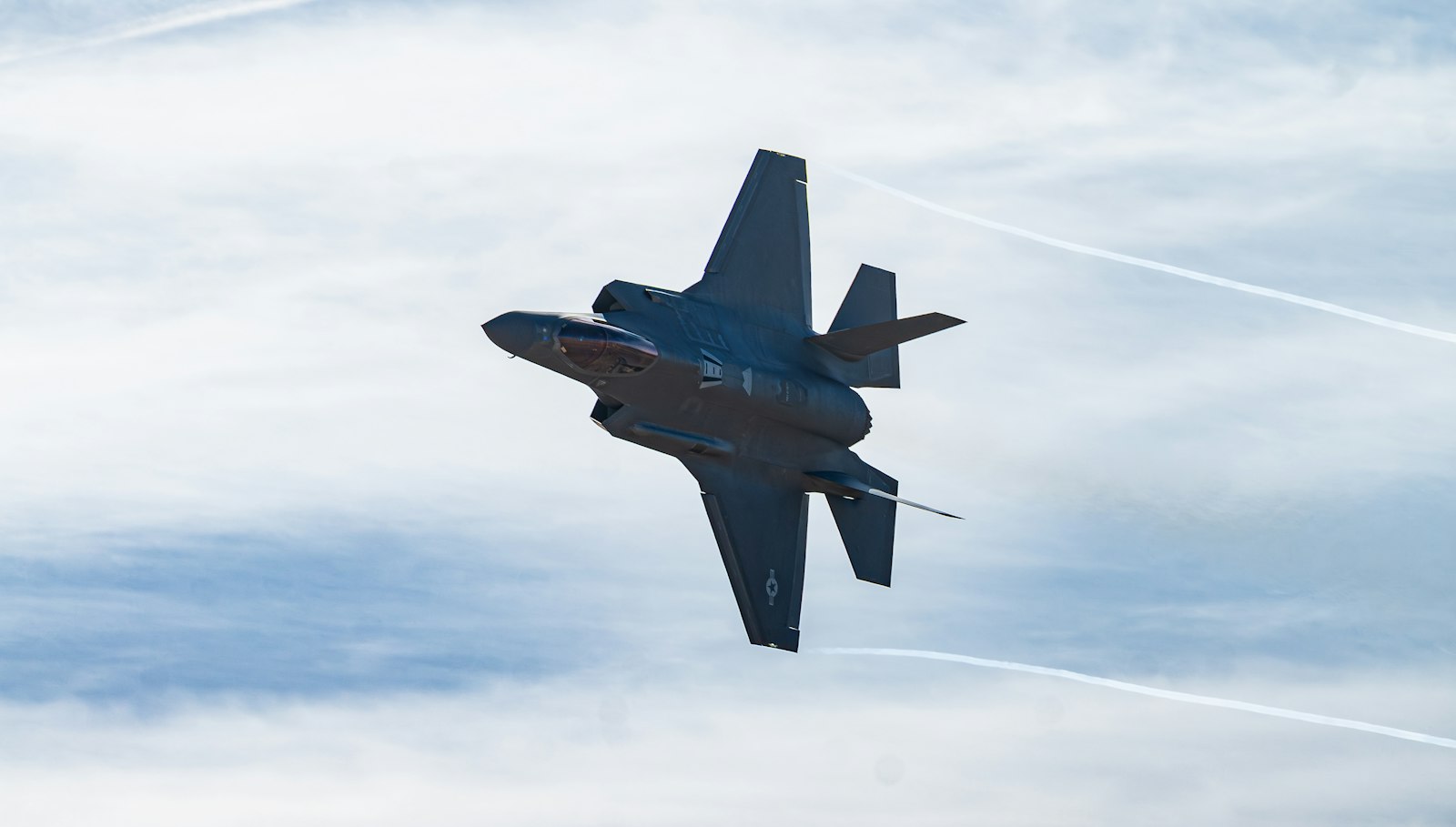
Federal law sets the basic shape of the Corps: at least three combat divisions and three air wings, organized to provide combined arms fleet Marine forces with supporting air components. That air arm is real. Marine squadrons fly F-35 fighters and tiltrotor aircraft of their own.
Origins
The Corps traces its start to Nov. 10, 1775, when the Continental Congress passed a resolution drafted by John Adams: "Resolved, That two Battalions of marines be raised." Recruits were supposed to be good seamen or at least familiar with maritime affairs. Samuel Nicholas, a young Philadelphia Quaker who ran a tavern, became the first Marine officer commissioned, and Tun Tavern in Philadelphia is traditionally named as the birthplace.
The Continental Marines were disbanded after the 1783 Treaty of Paris. The United States Marine Corps was created again on July 11, 1798, under an act signed by President John Adams.
Size
The Corps was authorized 172,300 active-duty Marines for fiscal 2026, with 173,700 sought for fiscal 2027. The Navy's 2026 budget submission counted another 33,600 Marine reservists and 20,970 civilians.
The money comes through the Navy's books. Of the Department of the Navy's roughly $292 billion request for fiscal 2026, about 80 percent was for the Navy; the Corps got the rest.
MEFs and MEUs
The Corps' largest operating formations are its three Marine expeditionary forces. I MEF is at Camp Pendleton, Calif., II MEF at Camp Lejeune, N.C., and III MEF at Camp Courtney on Okinawa, Japan.
The unit most people see is far smaller. A MEU, over 2,000 Marines with their vehicles and some aircraft, deploys aboard a three-ship amphibious ready group led by a big-deck assault ship.
Force Design: a lighter Corps
The Corps' current overhaul began on March 23, 2020, when Gen. David Berger announced Force Design 2030. Renamed simply Force Design in early 2024, the plan traded heavy equipment for lighter units built for littoral warfare, the fight along coastlines. The Congressional Research Service tallies the cuts:
- Tanks: every tank battalion is gone. The Corps had more than 450 tanks, and more than 400 have been handed to the Army.
- Cannon artillery: batteries cut from 21 to 5.
- Infantry: battalions cut from 24 to 21.
- Amphibious vehicle companies: down from 6 to 4.
- F-35 squadrons: down from 16 aircraft each to 10.
- People: 12,000 fewer by 2030.
In their place come Marine Littoral Regiments. The 3rd Marine Littoral Regiment, part of III MEF, reached initial operating capability in December 2023, and the 12th, on Okinawa, was projected to reach it in 2026. They field NMESIS, a ground-based anti-ship missile mounted on an unmanned JLTV, along with the MADIS air defense system and the G/ATOR radar.
The plan has been adjusted as it went. Updates came out in 2021, 2023 and October 2025, the last under Gen. Eric Smith, with no formal update in 2024. Infantry battalions, first planned at 735 Marines, were later set at 811, and the Corps decided to keep the 4th Marine Regiment in III MEF as a reinforced infantry regiment instead of building a third littoral regiment.
Next guide: the Marine Raiders
How the Corps picks Marines for its special operations command.
Becoming a Marine
Enlisted recruits spend 13 weeks at Marine Corps Recruit Depot Parris Island, S.C., or Marine Corps Recruit Depot San Diego. Which one you get generally depends on where in the country you enlist. Training runs in four phases, called Foundation, Immersion, Transformation and Transition, and builds to the Crucible, a 54-hour final test with little food or sleep and 45 miles of marching.
Before you ship, read up on height and weight standards, and use our basic training comparison to see how the depots stack up against the other services. For special operations, start with the Raiders and MARSOC. For aircraft, our F-35 explainer covers the B and C versions Marine squadrons fly.
Sources
- American Battlefield Trust: "Resolved, That two Battalions of marines be raised"
- Congressional Research Service: Defense Primer: Department of the Navy (IF10484)
- Congressional Research Service: FY2027 NDAA: Active Component End-Strength (IN12728)
- Congressional Research Service: U.S. Marine Corps Force Design Initiative (R47614)
- Congressional Research Service: Defense Primer: Naval Forces (IF10486)
- Marines.com: Recruit training